Up to this point—as readers have observed—no mention has been made of specific dates; because we do not know when the Sialk civilisation came into existence, nor in what period the Iranians migrated to the Zagros, and we are unaware of the date when the great central lake of Iran dried up, and we do not know when the Turanians first undertook invasions, and so forth. But from now on we enter the stage of approximate history, and we can state approximately when events occurred, until gradually we reach the stage of exact history.
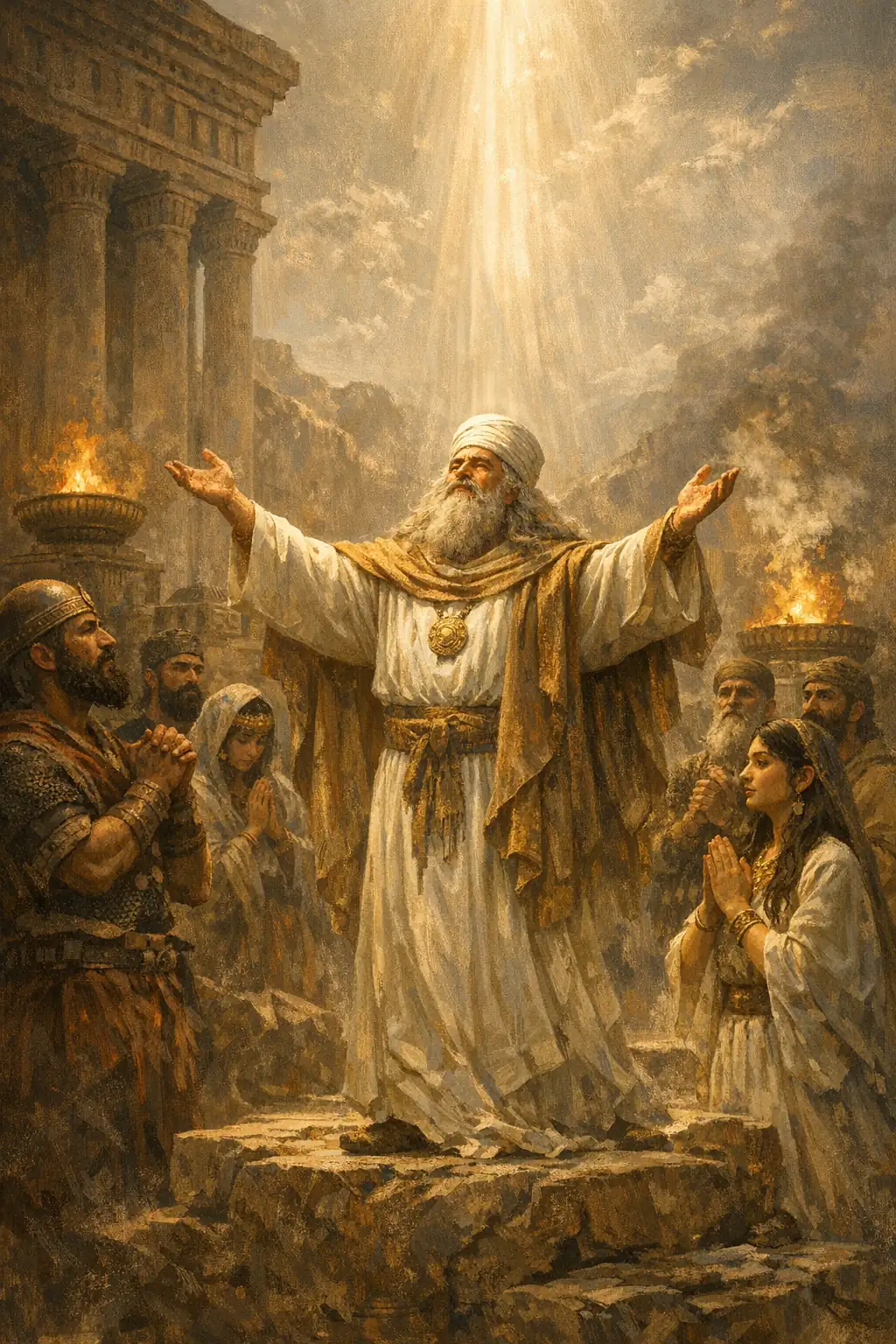
At the time when Sam created the mounted army in Iran and rules for warfare were established, a great intellectual and religious transformation took place in Iran, and the Iranian nation, which until that time worshipped the sun, realised that the true god is not the sun, but rather the one who created the sun and the moon and the stars and the earth.
At the beginning of the Sialk civilisation, the idea of worshipping the sun by the Iranians was also one of the manifestations of the genius of that nation, and it was pointed out that since everything that exists on earth comes into being from the sun, and nothing can be found on the terrestrial globe that is not from the sun, therefore if a primitive society worships the sun, it should not be reproached.
But in the heroic period of Sam, that is approximately in the fifth or fourth millennium before Christ, the Iranians became aware of a principle which proves that the intellectual power of that society, in terms of mental strength, was no different from the intellectual power of the most advanced societies of today.
That principle was that they realised that the sun, or all the power it possesses, is not God, but that it, like other beings, is created and made, and that there exists a creator by whom everything, including the sun, has been created.¹
The intelligent and gifted Iranians realised that the sun is not omnipotent, and that the one who sets the sun in motion should be worshipped, and that the sun is the manifestation of His power, not He Himself.
This belief in God is the purest monotheistic belief, and wherever a people exists who believe in one God, they have adopted that belief from the Iranians, and the roots of monotheism in all monotheistic religions initially grew in Iran. The noteworthy point is that five or four thousand years before Christ, when the idea of worshipping God arose in Iran, it was so prominent and one might say complete that it is no different from the belief of a monotheistic God-worshipper today.
From the very time that the Iranians realised that the sun is created and not the creator and that the creator must be worshipped, they understood that the creator of the sun and the moon and the stars and the earth and human beings and animals and plants is one and not two.
They understood that the creator of the universe has no body and has no specific location; therefore He is everywhere and is not subject to the passage of time, and for Him the past, present, and future make no difference, and He cannot be seen nor His voice heard, but the sun and the moon and the stars and the earth and human beings and animals and plants are manifestations of His power.
This lofty idea regarding the creator of the universe appears ordinary today, but if we refer to seven or six thousand years ago, when three-quarters of humankind on the terrestrial globe were savage, we understand how great and brilliant it was, and that it sprang from a very powerful intellectual and mental force, the like of which cannot be found today among all peoples.
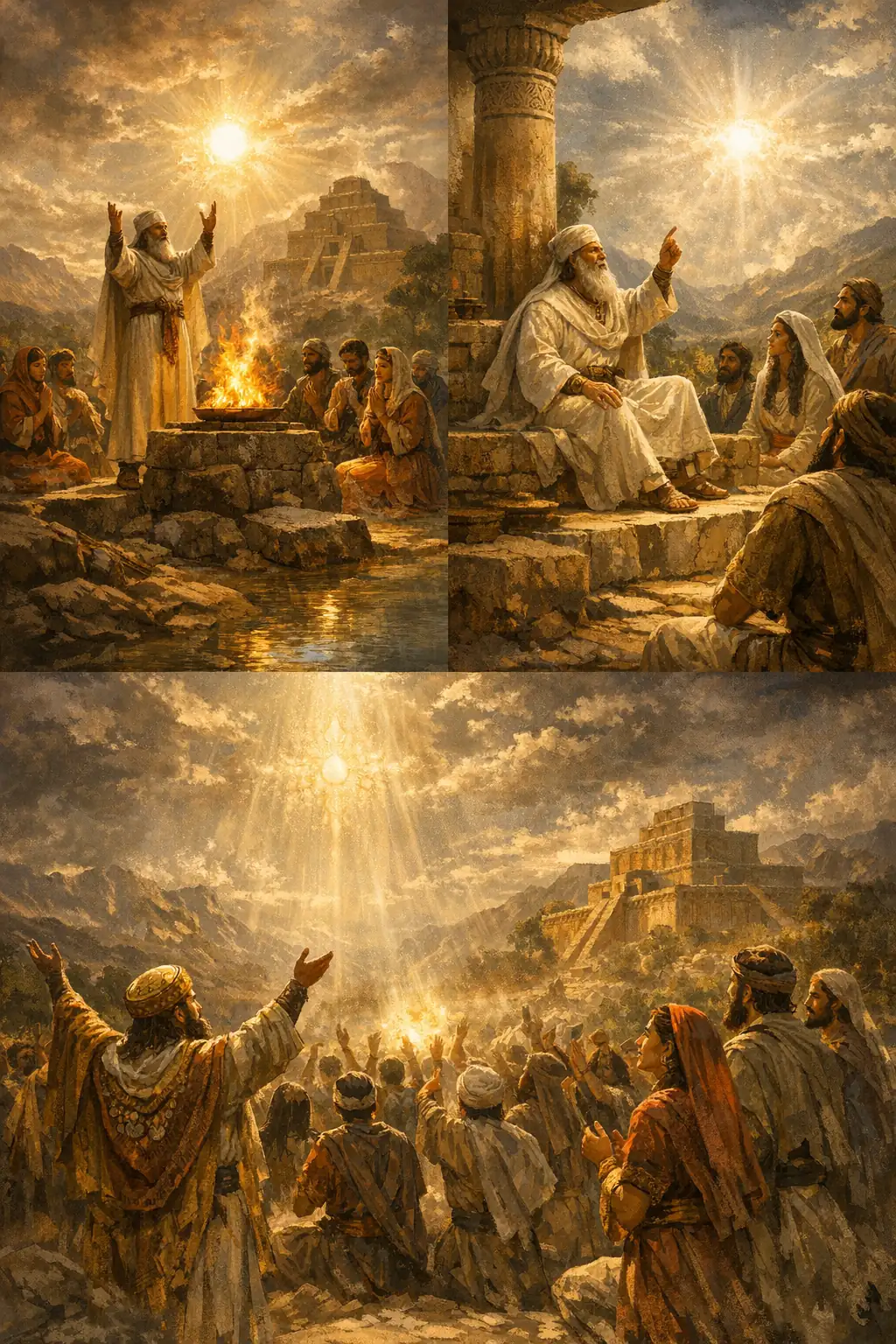
The early Iranians, seven or six thousand years ago, when they adopted the worship of the one God, came to believe that God, the creator of the universe, is absolute good, and that nothing but goodness proceeds from Him, and that whatever appears in the form of evil is the ignorance of humankind regarding the will of God; and this ignorance—that is, “Ahriman”—is constantly in conflict with goodness, because ignorance is always in conflict with knowledge.
The Iranians who believed in one God could not conceive of the existence of another god, and what was called Ahriman was nothing other than the ignorance of humankind regarding the will of God and the good things that He has desired for the children of Adam.
They said that God does not bring about floods and earthquakes and famine and diseases in order to harm humankind; for from God, who is absolute good, nothing but blessing and goodness emanates. The harm that floods and earthquakes and famine and diseases and lightning and so forth inflict upon human beings arises from human ignorance, and from not knowing how to protect oneself from floods and earthquakes and famine and diseases and lightning and the like, and this ignorance was called Ahriman.
The ancient Iranians called the one God Yazdan or Izad, and they called human ignorance with respect to the will of God Ahriman, and over the course of several thousand years of Iranian history these two names changed, and the Iranians who worshipped the one God believed that ultimately Ahriman would be defeated by Yazdan—that is, human ignorance regarding the will of God would disappear—and that thereafter, since humankind would understand the divine will and would know how to make use of the bounties of nature, it would never again suffer harm from earthly and celestial calamities and diseases.
If we judge this belief with a spirit of fairness, we see that the monotheistic Iranians deserve praise for holding such a belief regarding the one creator, and for having discovered the path of human salvation in this way—that is, the necessity of expanding knowledge in order to make better and greater use of God’s blessings and to be safeguarded from earthly and celestial afflictions.
This is exactly what modern humanity does through the power of science, striving to penetrate the secrets of nature so that it may benefit more and better from natural endowments and protect itself from calamities.
Even today, although seven thousand or six thousand years have passed since the emergence of belief in God in Iran, the belief of all monotheistic God-worshippers regarding God is the same as that which the Iranians held in ancient times.
Endnotes
1- The earliest intellectual source of the recognition of God and monotheism emerged in Iran — Franz Altheim, the great German Iranologist.
