
Rud still did not know what adverse effects that event would bring upon the lives of the people of Sialk and the inhabitants of other Iranian towns, including the people of Giyan. The first harmful consequence of the lake’s desiccation was that the people of Sialk were plagued by insects—especially mosquitoes. Those insects not only robbed people of peace during the day but would not let them sleep at night. In Sialk everyone suffered from mosquitoes; anyone wishing to avoid their stings went to the fire-house, for people imagined that mosquitoes were afraid of fire. Around the fire-house no mosquitoes were found—even though there was no fire burning there. By innate intelligence, the Iran-ban realized that what kept mosquitoes away from the fire-house was smoke, not fire. She therefore ordered people to kindle fires in their homes so that the smoke would drive the mosquitoes away, and the people, following […]
The Eternal Landسرزمین جاوید
“The Eternal Land” is an expansive narrative of ancient Iran that, in a storytelling prose, traces a blend of myth and history from the eras of the Pishdadians and Kayanids up to the rise of the Achaemenids. Its well-known Persian version is by Zabihollah Mansouri, who, rather than a word-for-word translation, rewrote the account based on the works of Iranologists such as Roman Ghirshman, Marijan Molé, and Ernst Herzfeld. The result is a compelling, readable work with vivid descriptions of rituals, wars, kings, and historical geography—an engaging introduction to the world of ancient Iran for a general audience.
«سرزمینِ جاوید» روایتِ بلندبالایی از ایرانِ باستان است که با نثرِ داستانگو، آمیزهای از اسطوره و تاریخ را از روزگاران پیشدادیان و کیانیان تا شکلگیریِ هخامنشیان دنبال میکند؛ متنِ فارسیِ مشهورش به قلمِ ذبیحالله منصوری است که بهجای ترجمهٔ لفظبهلفظ، بر پایهٔ نوشتههای ایرانشناسانی چون رومن گیرشمن، ماریژان موله و ارنست هرتسفلد، روایت را بازنویسی کرده است. نتیجه، اثری پرکشش و خواندنی با توصیفهای تصویری از آیینها، جنگها، پادشاهان و جغرافیای تاریخی است که برای آشنایی عمومی با فضای ایرانِ کهن جذاب است.
Continue reading The Eternal Landادامه مطالعه سرزمین جاوید

A Great Catastrophe in Iran’s Paradise (Part II)
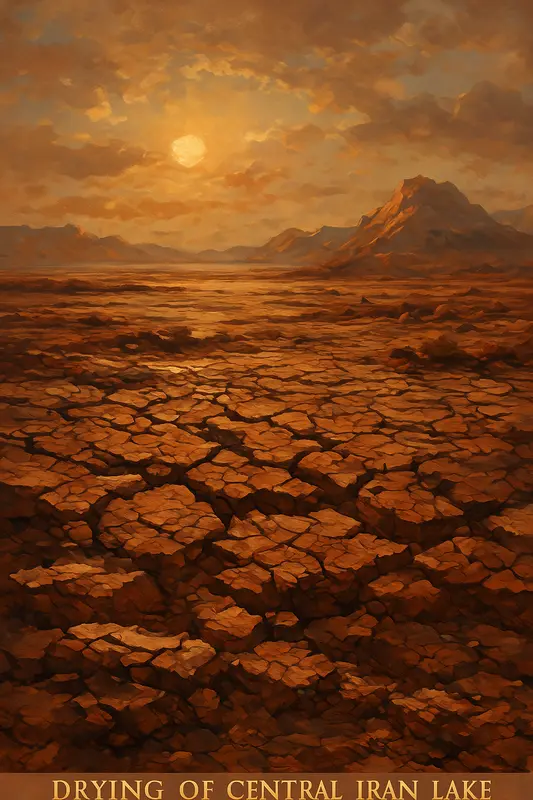
Drying of the Central Iranian Lake
The earth kept trembling, the birds and the forest animals fled, and the lake churned as great, towering waves crashed against the hills. The Iran-ban shouted for everyone to reach the hilltops and lift their children upward. When the people of Sialk gathered atop the hill, they were so terrified they nearly collapsed. The ground had stilled, but the darkness was like night, and the lake’s waves assaulted the shores with such force that their roar nearly deafened the inhabitants of Sialk. Until that day, no one had seen such a tempest on the lake, and the waves destroyed a number of houses with everything in them. People asked Rud what had happened and why the lake and sky had turned their wrath upon them, but she could not give her followers a convincing answer. When the sun set and absolute darkness took hold everywhere, the hills began to quake. […]
A Great Catastrophe in Iran’s Paradise (Part I)

Centaur Painted on the Ancient Vase
On the day Zab mounted the horse in that city and rode from one side to the other, the mouths of Giyan’s people fell open in astonishment; for until that day they had not seen a creature whose upper part resembled a human yet had four long limbs and could run swiftly—in truth, they imagined Zab, mounted on the horse, to be joined to the animal. As Mazun related to Rud, in the city of Giyan there lived a number of wood-carvers who, with stone chisels, incised various figures on wood—especially the forms of animals—and the sight of Zab so amazed them that several resolved to depict that animal with their stone tools; thus, for the first time in the world, a creature (on wood) came into being whose upper torso resembled a human and whose lower half resembled a horse!¹ When Zab returned from the city of Giyan, news […]
The Reign of Rud and the Age of Inventions and Discoveries (Part III)

Rud & Mazun at the Potter’s Wheel (Workshop Study)
From the day the crowing of the rooster was first heard in Sialk, when Rud was seen beneath the olive trees on the slope of the hill by the lake, two great changes took place in the life of her people. The first was that they began to use a creature called Aspa — meaning “slow-footed” — to carry loads and travel from one place to another.The second was that they brought a short-bodied animal, the sheep, down from the mountains and began to raise it in Sialk. When the sheep were brought, Rud said to the people:“All living creatures, like human beings, are male and female. If you wish the number of a species to increase, its males and females must live together.” From then on, the people of Sialk, in addition to mares, also kept rams and ewes so that their kind might multiply.And since Sialk was connected […]
The Reign of Rud and the Age of Inventions and Discoveries (Part II)
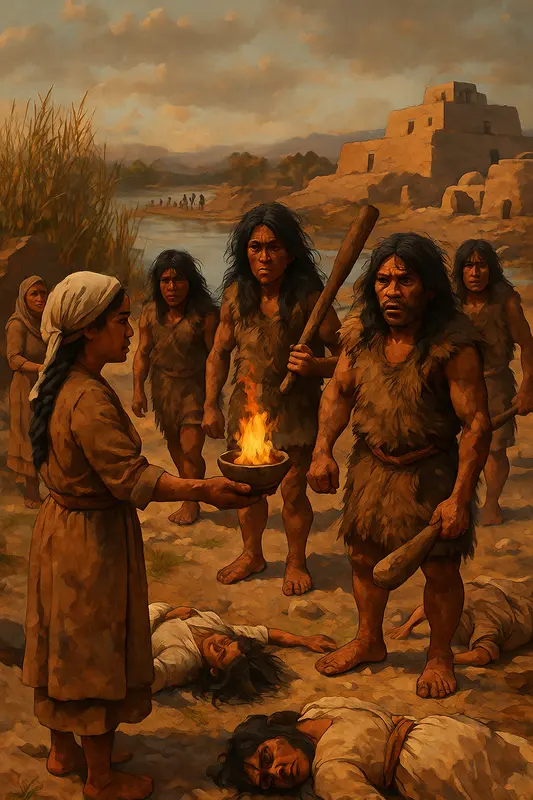
Offering Fire to the Turs
After several years of Rud’s reign had passed, she gave birth to a daughter — her second child — and was overjoyed, knowing that after her death the girl would succeed her, just as she herself had succeeded her mother-in-law. At the very time of Rud’s childbirth, sad news came from the south of the lake: dark-haired, dark-eyed men and women had attacked a settlement on the southern shore, killing three men and two women before fleeing. Until that day, such a thing had never occurred in the land of Iran. No man had ever attacked another man, nor woman another woman, for there had been no cause for violence. Food was so abundant that even if all the people of Iran had gathered in one place, they would not have suffered hunger. They lived on the meat of deer, ducks, fish, and cattle. Agriculture had not yet begun, so […]
The Reign of Rud and the Age of Inventions and Discoveries (Part I)
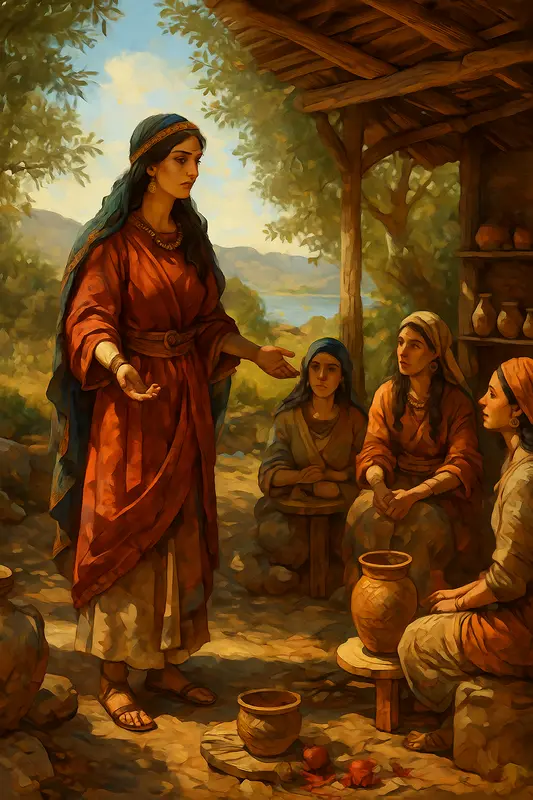
The Reign of Rud and the Age of Inventions and Discoveries
Iran-ban was ill for fifteen days, and on the fifteenth day she bade farewell to life. At the very hour that the woman passed away, the people of the city of Sialk, by unanimous consent, declared her daughter-in-law Rud to be their new Iran-ban (ruler). Iran-ban died at sunset. The next morning her body was carried out of the city, and after travelling about one farsakh, they reached a mound called Gom.On that mound they laid the body so that her face turned eastward—toward the rising sun. All the inhabitants of Sialk were present that day, standing upon the mound of Gom, bidding farewell to Iran-ban. “Gam” was a mound especially reserved for the dead, and from this word comes the Persian gham and ghamgin (“sorrow,” “sorrowful”).(Ref: Mohl) Zab, the son of Iran-ban, knew that after some time nothing would remain of his mother’s body but bones. Being her nearest […]
The Iranians at the Dawn of History Part(III)
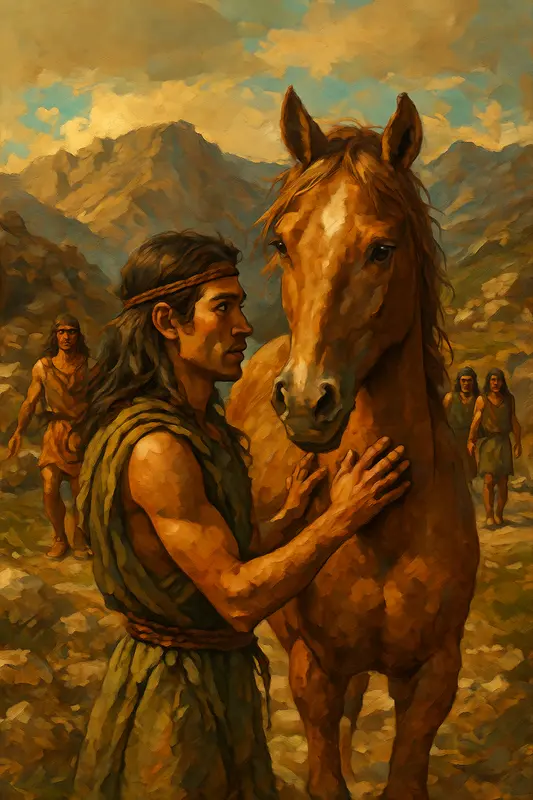
iranian where the people who first tamed animals in the word
Rud suffered greatly in labor. By today’s reckoning, a little more than an hour passed from her first pang until the child was born.She took the infant in both hands and licked him clean from head to toe; then the child opened his blue eyes. “Your eyes are like your father’s,” she said with delight, and laid him in a cowskin to rest. The next day, when he awoke, she put her breast to his mouth; he drank the milk and fell asleep again. Women in our age rest for days after childbirth, and until even fifty years ago many died of puerperal fever. But Rud and the women of Sialk did not rest even an hour after giving birth—and they also did not rest beforehand. In their lives, idling before or after childbirth had no place. They did not suffer childbed fever, for there were no midwives to infect […]
The Iranians at the Dawn of History (Part II)
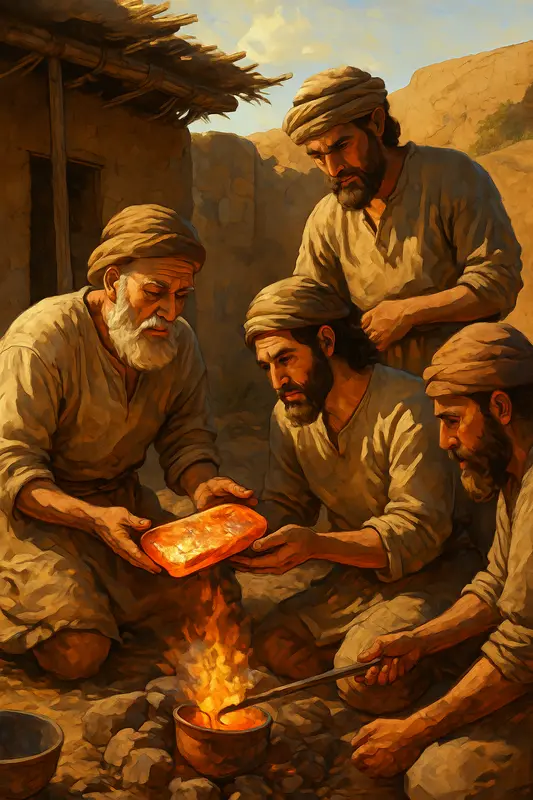
copper extracting for the first time by iranians
The woman’s concern pleased Iranban, for it showed care for the herds. Then someone in the crowd said:“In the north, some people don’t eat duck or fish or venison or beef. They eat wheat and barley.” “I told them,” said Iranban, “that eating wheat makes a person ugly and weak.” A man called out: “We never eat wheat. Wheat is food for our deer and cattle; it fattens them.” “Yes,” Iranban replied, “wheat makes humans ugly—and, besides, it brings misfortune.” A woman asked: “How does it bring misfortune?” Iranban answered: “I heard it from my mother, who heard it from hers: if a human begins to eat wheat, the day will come when his food will be nothing but wheat, and he will find no other nourishment. Let the wheat rot on the mountain slopes; do not gather it—especially do not eat it—so that Khur will not be angered with […]
The Iranians at the Dawn of History (Part I)
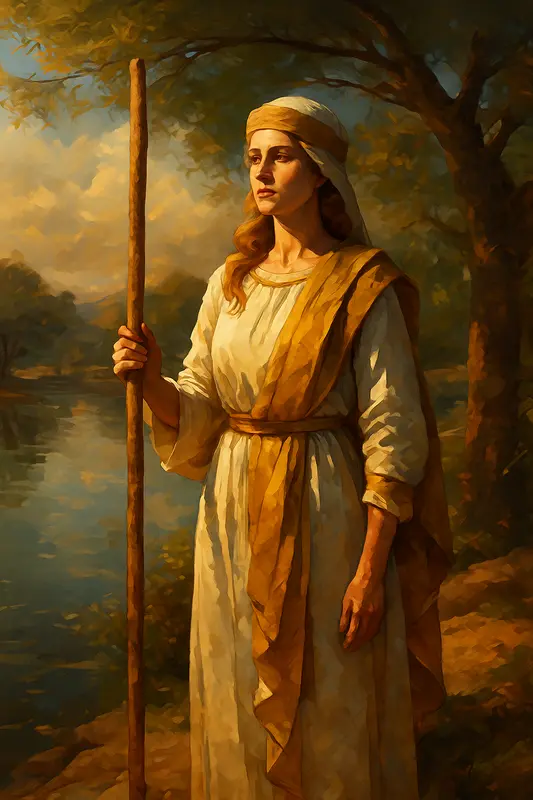
Iranban Image
A tall, slender young woman stood on the slope of a hill overlooking a lake, among the olive trees, watching a ship drawing near.The vessel was being pulled by several deer walking through the shallow waters along the shore. From inside the boat came the melodious voice of a woman singing: “O my beloved, come, let us go to the mountain,There we shall milk the cows,And afterward sit upon the grass.” The young girl, gazing at the approaching ship, murmured to herself:“Today, Iranban is joyful—she is singing.” Her guess was correct. Iranban was indeed cheerful that day, and all her subjects knew that whenever their queen felt happiness, she would sing. Iranban—meaning the Lady of Iran—was a tall woman of about forty, broad-shouldered, with golden hair and a commanding presence.She always carried a wooden staff made from the tamarisk tree and ruled over a vast realm of nearly two hundred […]
Introduction
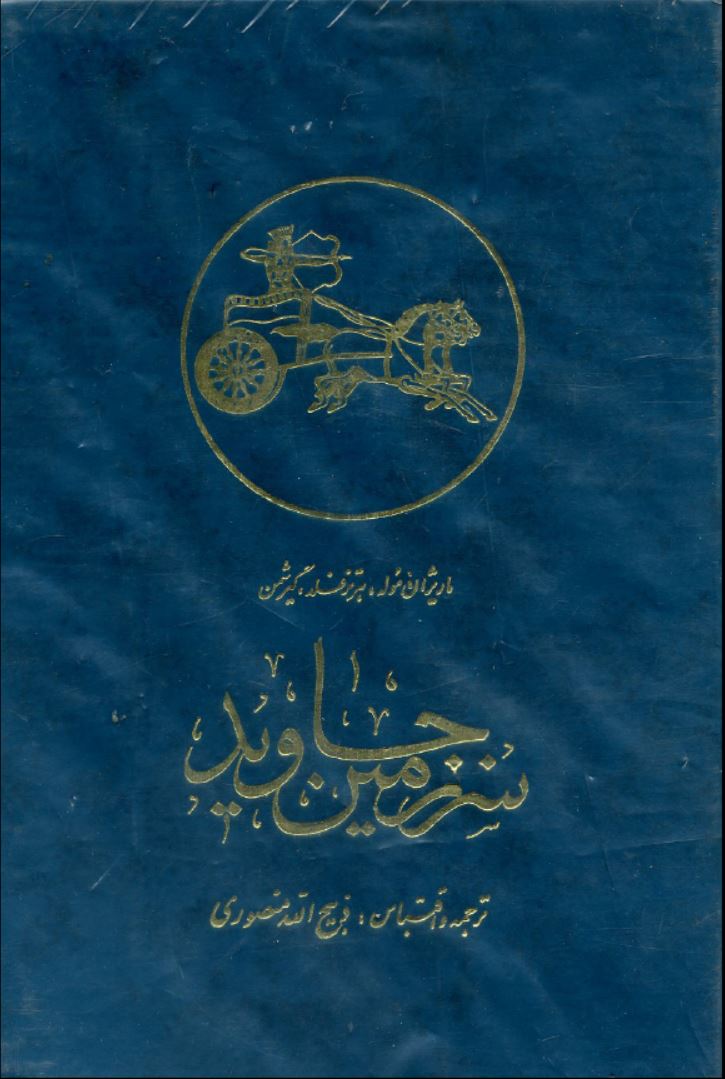
the eternal land book cover
The Eternal Land (Volume I) From the Works of Marijan Moulé – Ernst Herzfeld – Roman GhirshmanTranslated by: Zabihollah Mansouri (1889–1986) Eleventh Edition (First Published by the Original Publisher) – 1999Print Run: 2,200 copiesLithography: ArdalanPrinting: GhiamBinding: TajikZarrin Publications – Bahar Shomali, Shahid Kargar 35Postal Code: 15637Tel: 7509998 Negarestan Ketab Publications – Enghelab Street, Ravanmehr Street, No. 208Tel: 6406666 All publication rights reserved by the publishers.ISBN: 964-407-042-9 (Four-Volume Series) Translator’s Preface We Iranians are strangers in our own homeland because we do not truly know it.Our knowledge about our country goes no further than a few classical histories — all of them incomplete and obscure.In these classical histories, before the introduction, there lies an unknown space, like the surface of Venus, where nothing can be seen — as if before the preface of our history, a bottomless pit had opened and swallowed everything within it. Even when we reach the written […]