The Reign of Rud and the Age of Inventions and Discoveries (Part I)
The Reign of Rud and the Age of Inventions and Discoveries

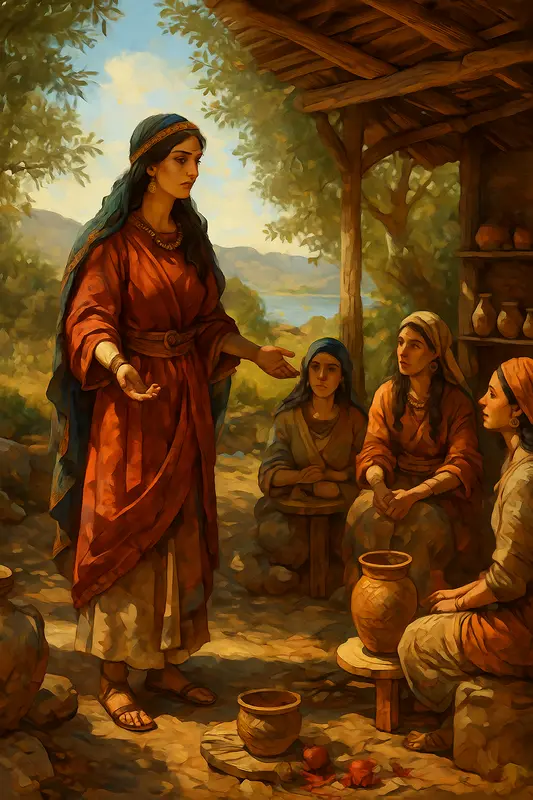
Iran-ban was ill for fifteen days, and on the fifteenth day she bade farewell to life. At the very hour that the woman passed away, the people of the city of Sialk, by unanimous consent, declared her daughter-in-law Rud to be their new Iran-ban (ruler). Iran-ban died at sunset. The next morning her body was carried out of the city, and after travelling about one farsakh, they reached a mound called Gom.On that mound they laid the body so that her face turned eastward—toward the rising sun. All the inhabitants of Sialk were present that day, standing upon the mound of Gom, bidding farewell to Iran-ban. “Gam” was a mound especially reserved for the dead, and from this word comes the Persian gham and ghamgin (“sorrow,” “sorrowful”).(Ref: Mohl) Zab, the son of Iran-ban, knew that after some time nothing would remain of his mother’s body but bones. Being her nearest […]

Read More »

Sialk

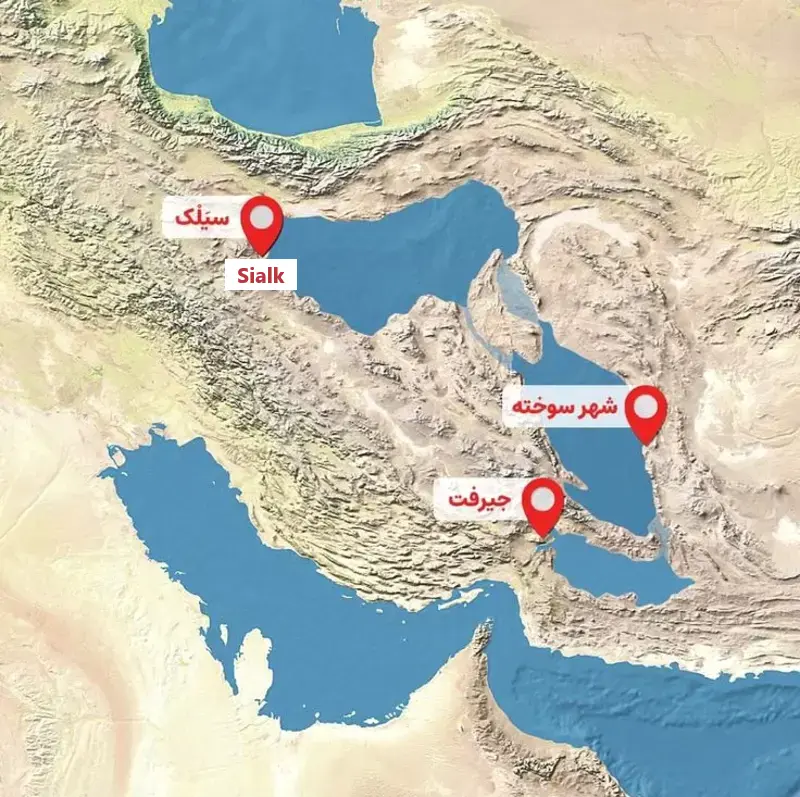
Sialk on the map

Tepe Sialk: The Earliest Urban Hub of Iran’s Central Plateau Identity & Location Name: Tepe Sialk (Read more on Wikipedia) Type: Ancient city–temple archaeological complex (two mounds + two cemeteries) Location: Isfahan Province, Kashan, Fin district (SW of Kashan, right side of the Kashan–Fin road) National Registration: No. 38, 24 Shahrivar 1310 (15 Sep 1931) Why Sialk Matters Sialk is among the most important archaeological sites on the Iranian plateau and one of the oldest known settlements in Central Iran, preserving a long cultural sequence from the Neolithic through the Chalcolithic, Early Urban, Bronze/Iron Ages, and a Median horizon. The site documents: The emergence of early villages and hand-built houses in the region; Agriculture (wheat, barley) and animal husbandry (cattle, sheep, goat); The evolution of ceramics (from coarse hand-made wares to fine wheel-made vessels with human/animal/plant motifs); The onset of metallurgy (copper extraction/smelting; furnaces on the south mound); Evidence of […]

Read More »

The Iranians at the Dawn of History Part(III)

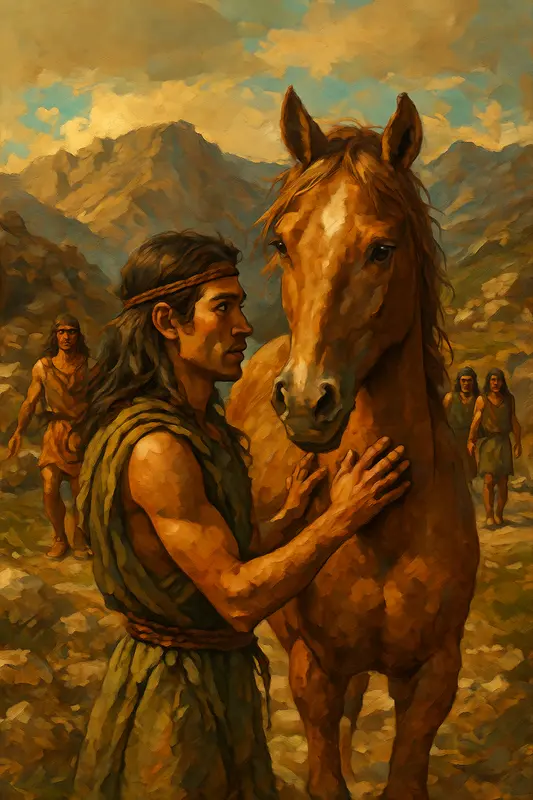
iranian where the people who first tamed animals in the word

Rud suffered greatly in labor. By today’s reckoning, a little more than an hour passed from her first pang until the child was born.She took the infant in both hands and licked him clean from head to toe; then the child opened his blue eyes. “Your eyes are like your father’s,” she said with delight, and laid him in a cowskin to rest. The next day, when he awoke, she put her breast to his mouth; he drank the milk and fell asleep again. Women in our age rest for days after childbirth, and until even fifty years ago many died of puerperal fever. But Rud and the women of Sialk did not rest even an hour after giving birth—and they also did not rest beforehand. In their lives, idling before or after childbirth had no place. They did not suffer childbed fever, for there were no midwives to infect […]

Read More »

The Iranians at the Dawn of History (Part II)

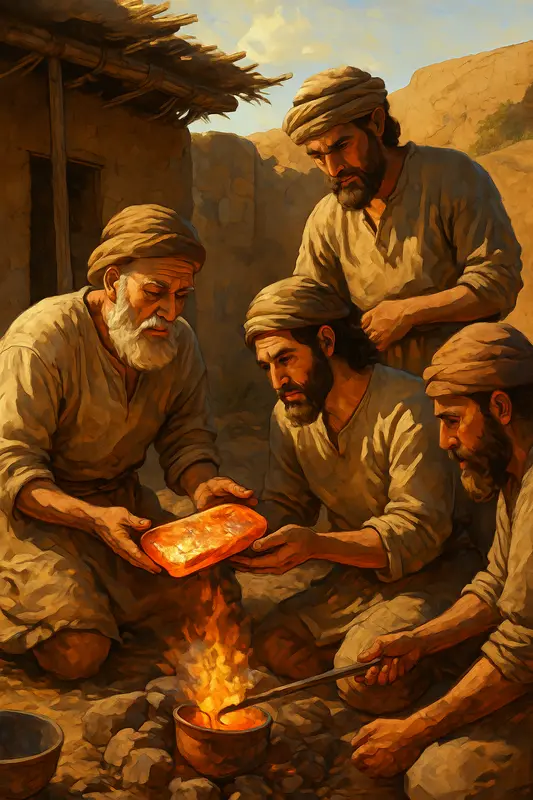
copper extracting for the first time by iranians

The woman’s concern pleased Iranban, for it showed care for the herds. Then someone in the crowd said:“In the north, some people don’t eat duck or fish or venison or beef. They eat wheat and barley.” “I told them,” said Iranban, “that eating wheat makes a person ugly and weak.” A man called out: “We never eat wheat. Wheat is food for our deer and cattle; it fattens them.” “Yes,” Iranban replied, “wheat makes humans ugly—and, besides, it brings misfortune.” A woman asked: “How does it bring misfortune?” Iranban answered: “I heard it from my mother, who heard it from hers: if a human begins to eat wheat, the day will come when his food will be nothing but wheat, and he will find no other nourishment. Let the wheat rot on the mountain slopes; do not gather it—especially do not eat it—so that Khur will not be angered with […]

Read More »

The Iranians at the Dawn of History (Part I)

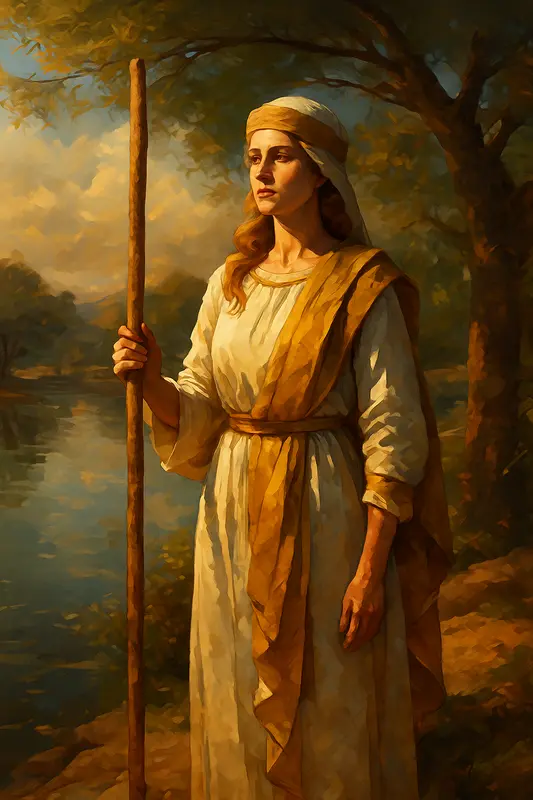
Iranban Image

A tall, slender young woman stood on the slope of a hill overlooking a lake, among the olive trees, watching a ship drawing near.The vessel was being pulled by several deer walking through the shallow waters along the shore. From inside the boat came the melodious voice of a woman singing: “O my beloved, come, let us go to the mountain,There we shall milk the cows,And afterward sit upon the grass.” The young girl, gazing at the approaching ship, murmured to herself:“Today, Iranban is joyful—she is singing.” Her guess was correct. Iranban was indeed cheerful that day, and all her subjects knew that whenever their queen felt happiness, she would sing. Iranban—meaning the Lady of Iran—was a tall woman of about forty, broad-shouldered, with golden hair and a commanding presence.She always carried a wooden staff made from the tamarisk tree and ruled over a vast realm of nearly two hundred […]

Read More »