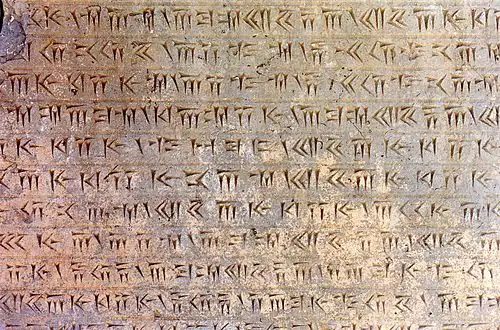
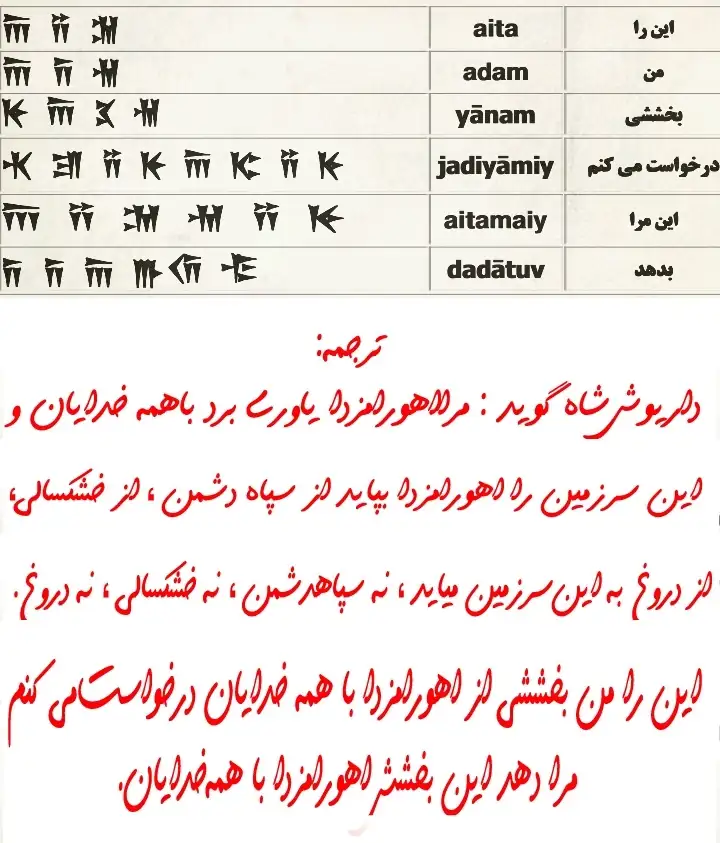
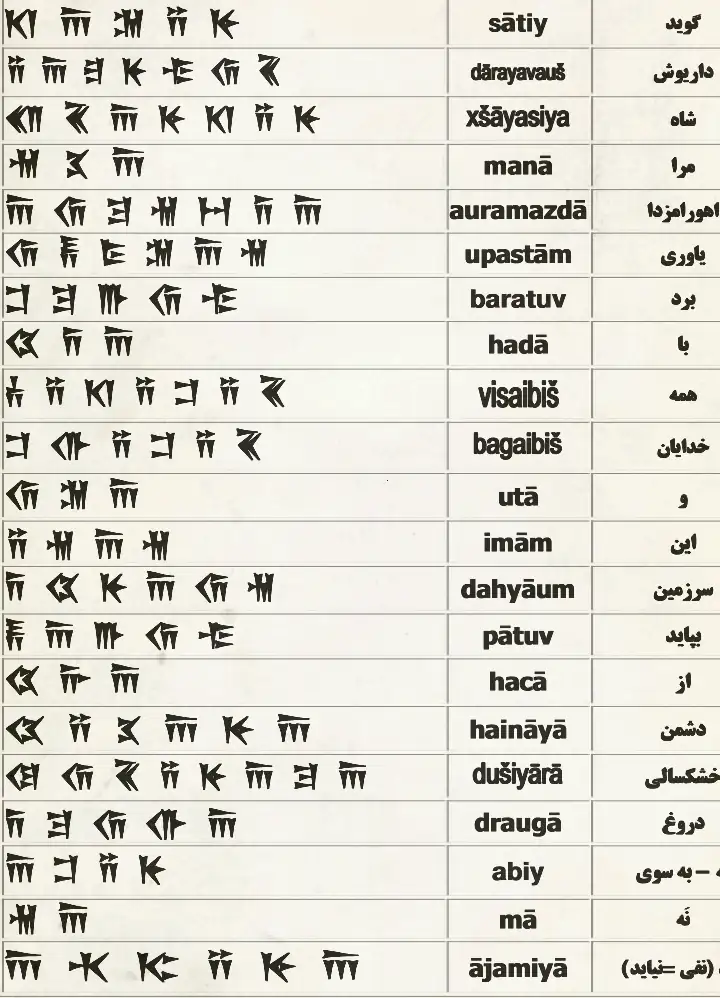
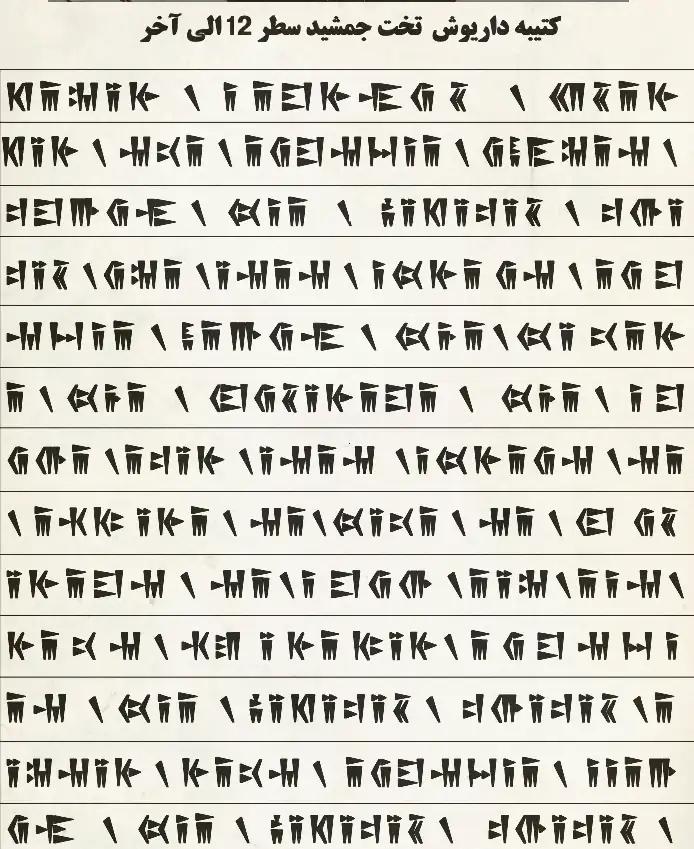
Old Persian (the language of the Achaemenid Empire) was written in a distinct cuneiform script known today as Old Persian cuneiform. This script is strongly associated with the Achaemenid royal inscriptions, and it appears most famously on monuments and tablets from sites such as Persepolis (Takht-e Jamshid), along with other imperial locations.
It is commonly stated that Darius the Great ordered a writing system to be prepared for Old Persian so that the language could be recorded in an official and consistent form. In historical discussions, Old Persian cuneiform is often described as being influenced by earlier cuneiform traditions in Mesopotamia, where Sumerian and Akkadian writing systems had already existed for centuries.
Main features of the script
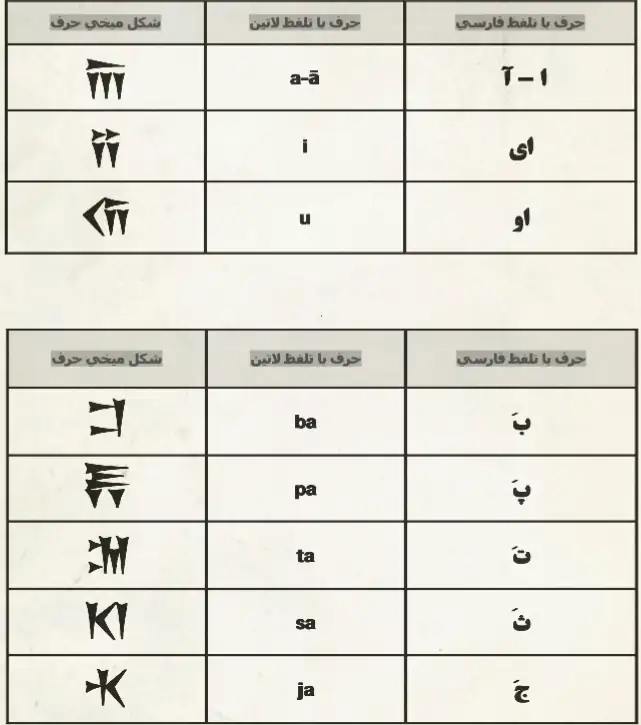
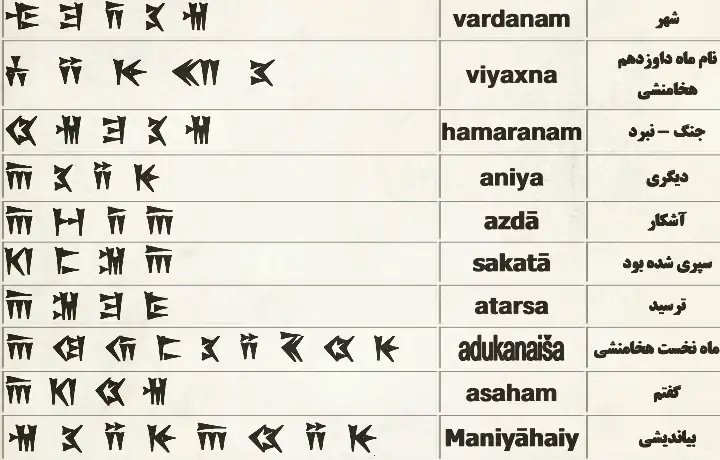
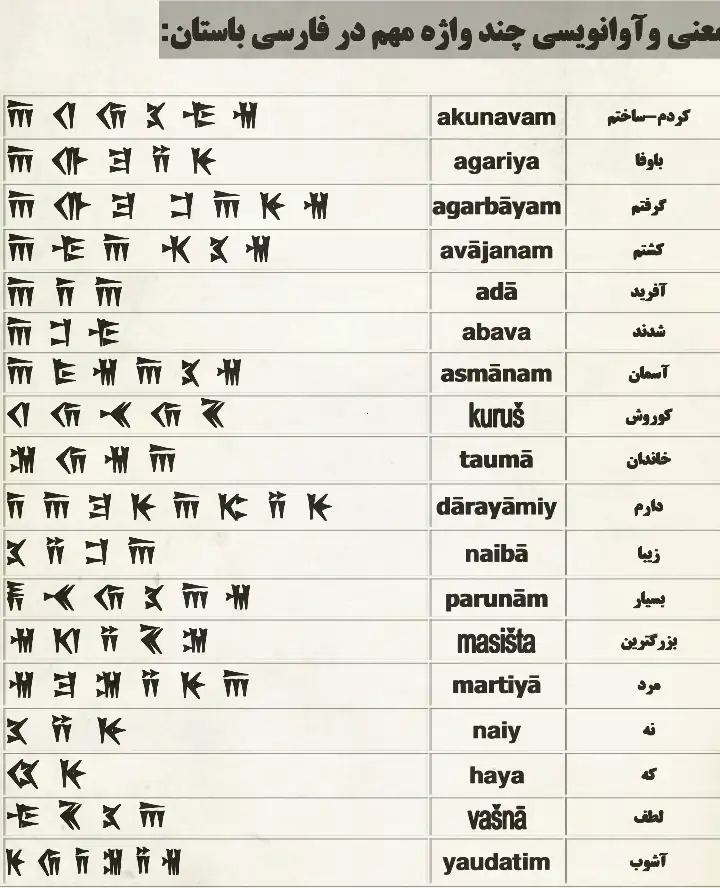
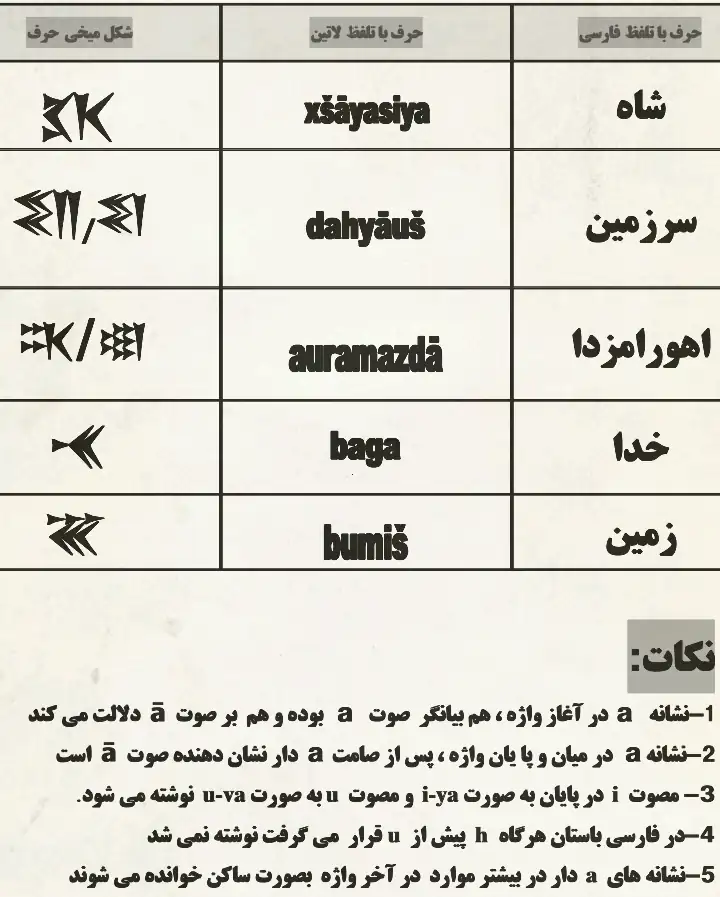
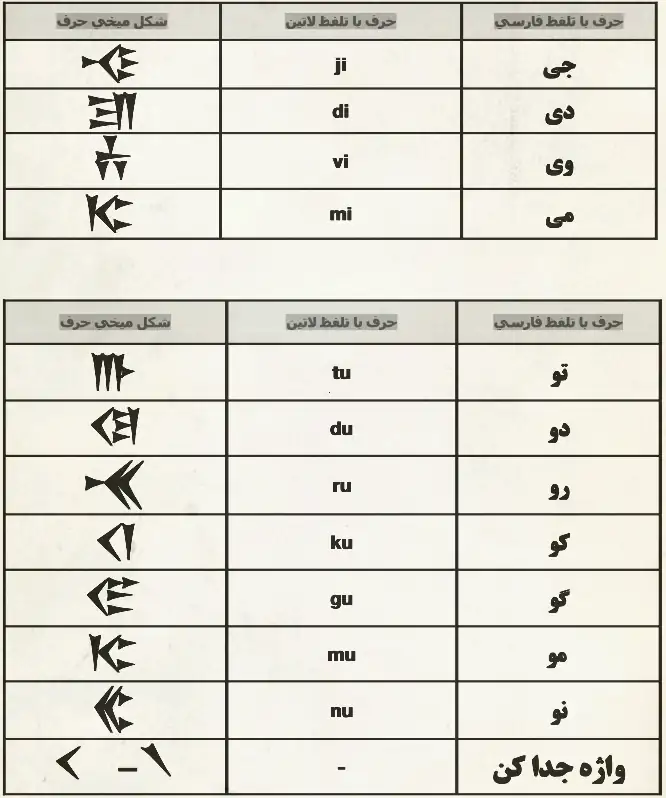
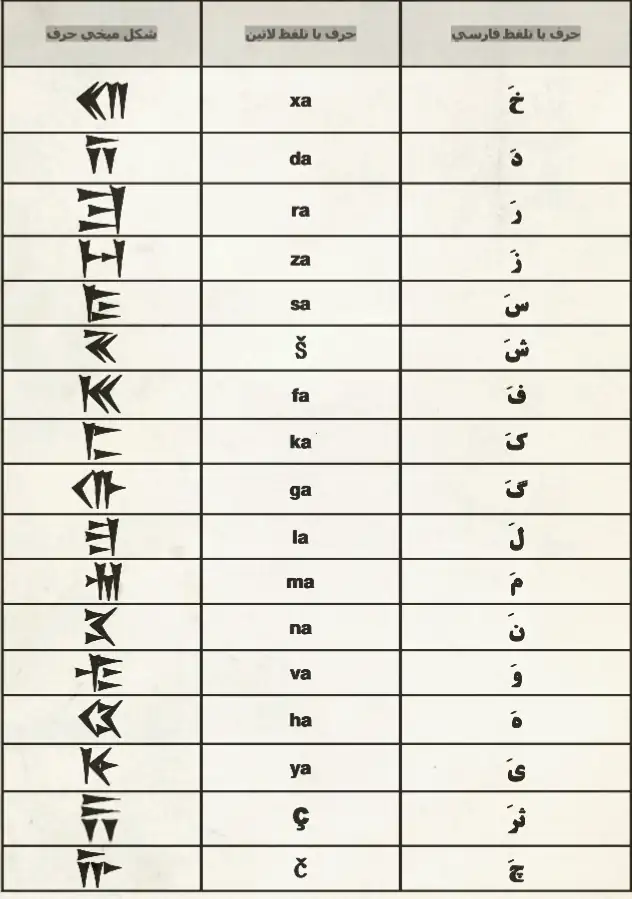
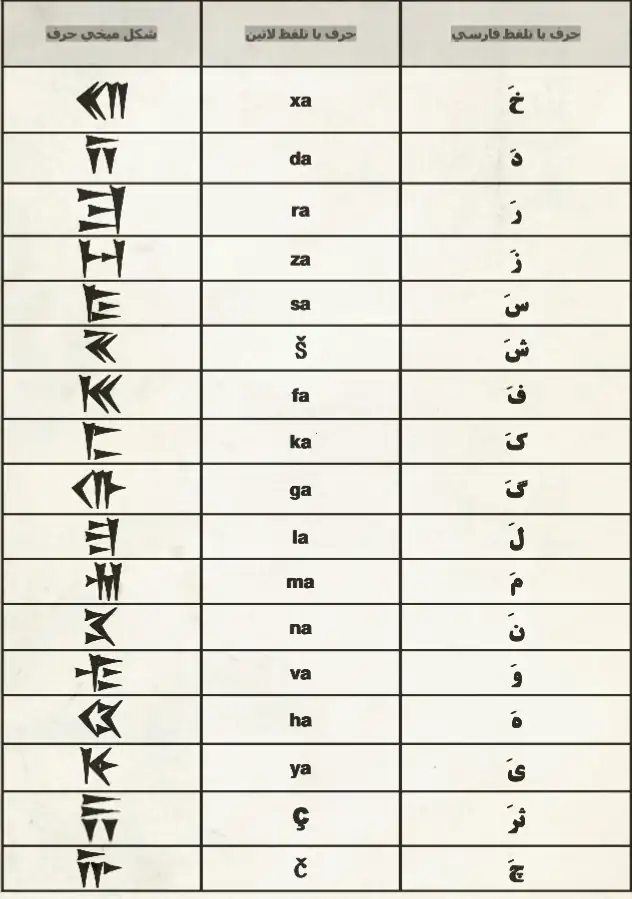
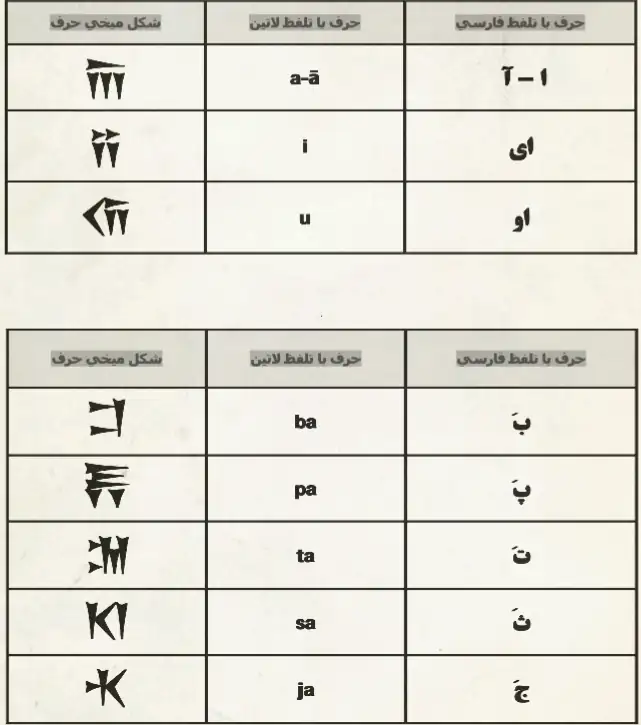
Old Persian cuneiform has a relatively small and organised set of signs compared with older Mesopotamian cuneiform systems. It is typically described as including:
-
36 phonetic signs
-
word-divider signs (used to separate words)
-
ideograms (signs used to convey certain meanings/words)
-
number signs (for representing numerals)
The script is written from left to right, and inscriptions often show careful spacing using the word-divider sign.
Rediscovery and decipherment
After the end of the Achaemenid period, knowledge of reading Old Persian cuneiform gradually faded. From the early 17th century onward, European travellers and visitors to Persian archaeological sites began reporting and copying inscriptions, especially from the ruins of Persepolis. In the 18th century, copies and publications of these inscriptions in Europe drew wider scholarly attention.
Among the well-known figures mentioned in the early history of publishing Old Persian cuneiform inscriptions are:
-
Jean Chardin (published a full copy of an inscription in 1711)
-
Count Caylus (presented a report on an inscription in 1762)
-
Carsten Niebuhr (produced more accurate copies and published them in 1778)
Researchers later recognised that some royal inscriptions were written in three different writing systems, representing three different languages. The identification of repeating patterns—especially royal titles—helped scholars progress further. From the early 19th century, the work of researchers such as Georg Friedrich Grotefend played an important role in advancing the decipherment of Old Persian cuneiform and establishing readings for several signs.
Why it matters
Old Persian cuneiform is one of the most important sources for the history of the Achaemenid Empire. Through it, we have direct royal texts that preserve names, titles, religious expressions, political statements, and details of imperial identity—recorded in the official language of the Persian kings.
Fun To Try
Turn your name or any words to the old Persian Cuneiform
Sources
- Beytoote.com
- Wikipedia Persian
- Wikipedia English
- khairiapps.rzb.ir
-
Rahnamā-ye Zabānhā-ye Bāstānī, Dr Mohsen Abolghasemi
-
Rahnamā-ye Zabān-e Fārsi-ye Bāstān, Dr Changiz Molāyi
-
Farmānhā-ye Shāhanshāhān-e Hakhāmaneshī, Narmen Sharp

One Response