Up to today historians have spoken of the migration of the Aryan race to Iran, but they have not mentioned the migration of Iranians abroad and have not said that Iranians to migrated out of the country of Iran.
By Iran here we mean a vast region between the Hindu Kush mountains and the rivers Jeyhun (Amu Darya) and Seyhun (Syr Darya) and the rivers of Mesopotamia and the Caspian Sea and the Sea of Oman and the Persian Gulf, and the Iranian peoples in this vast region were divided into numerous groups, and three thousand years before Christ three groups of these peoples became distinct, that is, they were clearly differentiated from the other groups, and they were the Parths (the letter “th” with three dots in this word should be pronounced so that it is close to “t” with two dots) and the Persis and the Medes. Between these three groups there were also other peoples who, in terms of race and dialect, resembled one of these three groups.
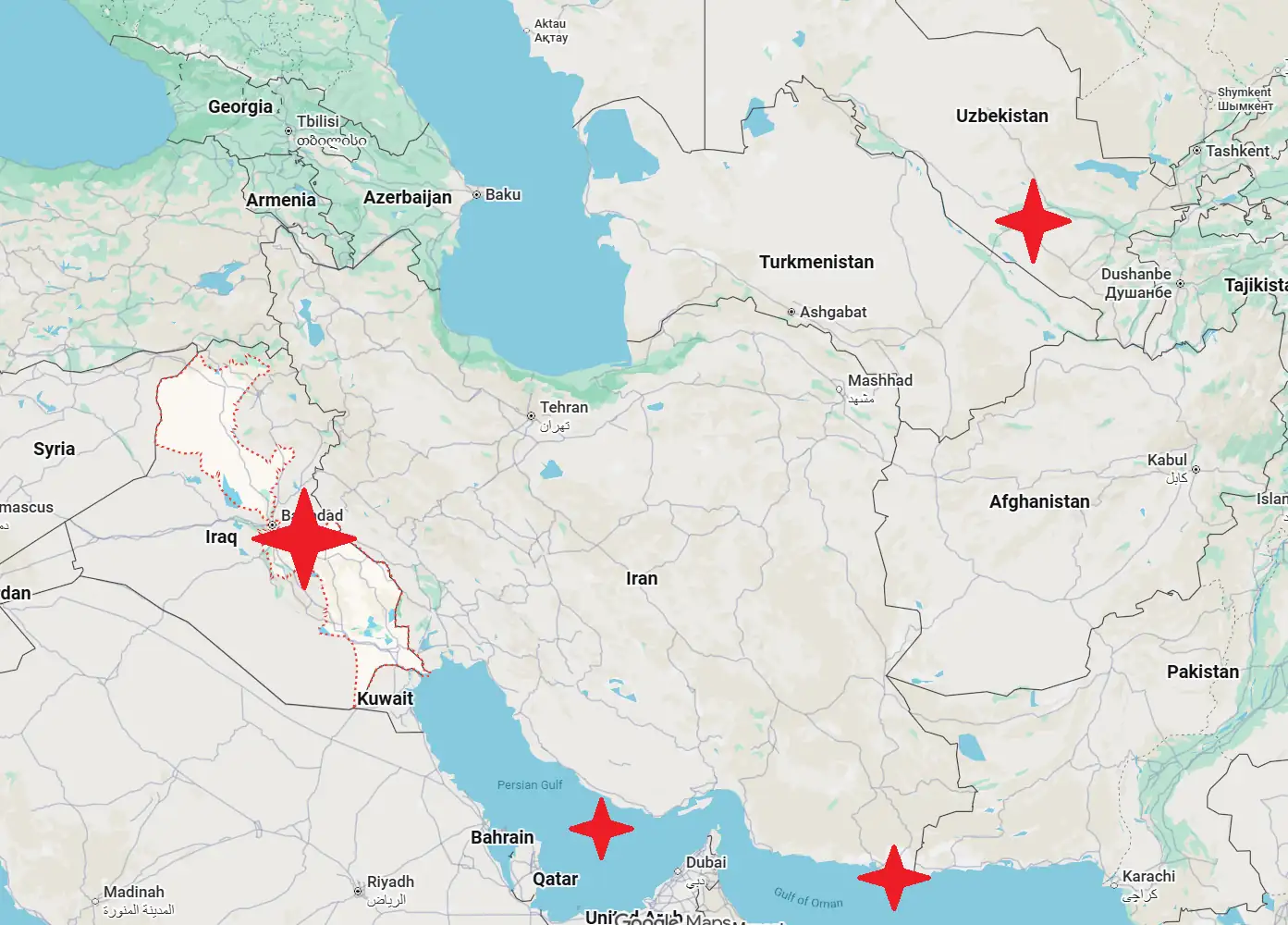
Such as the Sakas who lived in Zabolestan and present-day Sistan and a part of present-day Afghanistan, and historians have not been able to attach them to any one of the three aforementioned peoples, or the mountain-dwellers of western Iran who lived in the Zagros mountains and today are known by the name Lor, and historians have not been able to attach those mountain-dwellers to any one of the three groups.
The Parth, Persian, and Median peoples became separated from one another as a result of internal migrations of the Iranian peoples, and none of them came from outside, but some mixture occurred between them and the Tur peoples and the Ouz peoples and the Qaz peoples whom we said attacked Iran.
The mixing of Iranians with other races is a normal matter, and in the world one cannot find a race, whether more or less civilised, that has not mixed with another race. Only races that lived for thousands of years far from civilised regions were able to preserve their originality, such as the Eskimo and Samoyed races, inhabitants of regions near the North Pole, and those same races now that they have become connected with centres of civilisation are losing their originality.
In race science there are two fundamental laws: first, that a race never disappears absolutely, and certainly a trace of that race remains in later generations, and today one can find traces of all the human races that have lived on the terrestrial globe since the beginning of the formation of humankind.
The second law is that an original race that has not mixed with other races does not exist, except for races that for thousands of years have had no connection with centres of civilisation, and even those races, like the Eskimo and Samoyed, at the beginning of their existence and before being separated from others in the polar region were a mixture of several races.
Hitler, the Chancellor of Germany, who after taking power decided to bring men who were specimens of the pure Aryan race into the assault group of the Nazi Party, was deceiving himself, and the leader of the assault group of the Nazi Party named “Himmler” was a mixture of several races, and anyone who saw his face, even if he had no knowledge of race science, would understand that he was not of pure Aryan race.
The Iranian peoples, after they had migrated many times within the country of Iran from one point to another, sought to migrate outside the country.
Contrary to the notion of some historians who have considered early humans to be travellers, they were not travellers in order to journey for sightseeing, nor were they people of scientific and geological research (in today’s sense) in order to leave the land of Iran for research and set foot in other countries. What compelled them to migrate was the same thing that compelled Columbus and Vasco da Gama and Magellan to travel, namely the necessity of earning a livelihood.
A part of the Iranians, during migration, took the eastern route and reached lands that today are called Pakistan and Kashmir, and Kashmir is still called New Iran or Second Iran. Another part set out by the western route and from the fertile regions of northern Mesopotamia reached Syria and then the shore of the White Sea (today called the Mediterranean Sea).
Since they knew seafaring and could build ships, after they reached the shore of the White Sea they built ships and became seafarers, and because the northern coasts of the Mediterranean Sea were green and fertile, they sailed along those coasts, and at every point suitable for settlement they established a colony, and among them they established a colony in the place that today is called the port of Marseille in southern France.
Until today Western historians said that the colony of Marseille was established by seafarers who came from Phoenicia, but they have not specified who those seafarers were and from what origin the original race of the Phoenicians (which later mixed with other races) came.
Today the existence of Iranian colonies on the northern coasts of the Mediterranean Sea has been established in such a way that one cannot deny this historical reality, because from the historical period remains have emerged from the soil that show that Iranians had colonies on the northern coasts of the Mediterranean Sea, and one of the Iranian colonies was located in the region of Monaco, and there remains were obtained from the soil that confirmed the existence of Iranian civilisation there and showed that in the Achaemenid period an Iranian colony lived there, and for this reason one of the diplomats of Iran named Prince Arfa al-Dowleh built a palace at that same point so that the location of the Iranian colony would be identified.
The Iranians, who were the first seafaring nation of the world, realised the importance of recognising the stars in seafaring before other peoples.
They say that the Phoenicians are the first people who were able to recognise the Pole Star, which is always located toward the north, but the early Phoenicians were Iranian migrants who reached the shore of the White Sea and created a civilisation there, and since they knew the craft of building ships and recognised the Pole Star, they undertook seafaring.
Even if it is assumed that they deny the Iranian origin of the Phoenicians and say that they were not Iranians, they cannot deny this fact that in ancient times several Iranian colonies existed in the north of the Mediterranean Sea, and indisputable historical remains prove the existence of Iranian colonies, and in the Achaemenid period the commercial and war ships of Iran went to France and Spain.
One of the regions where a colony was established by the Iranians is the island of Crete.
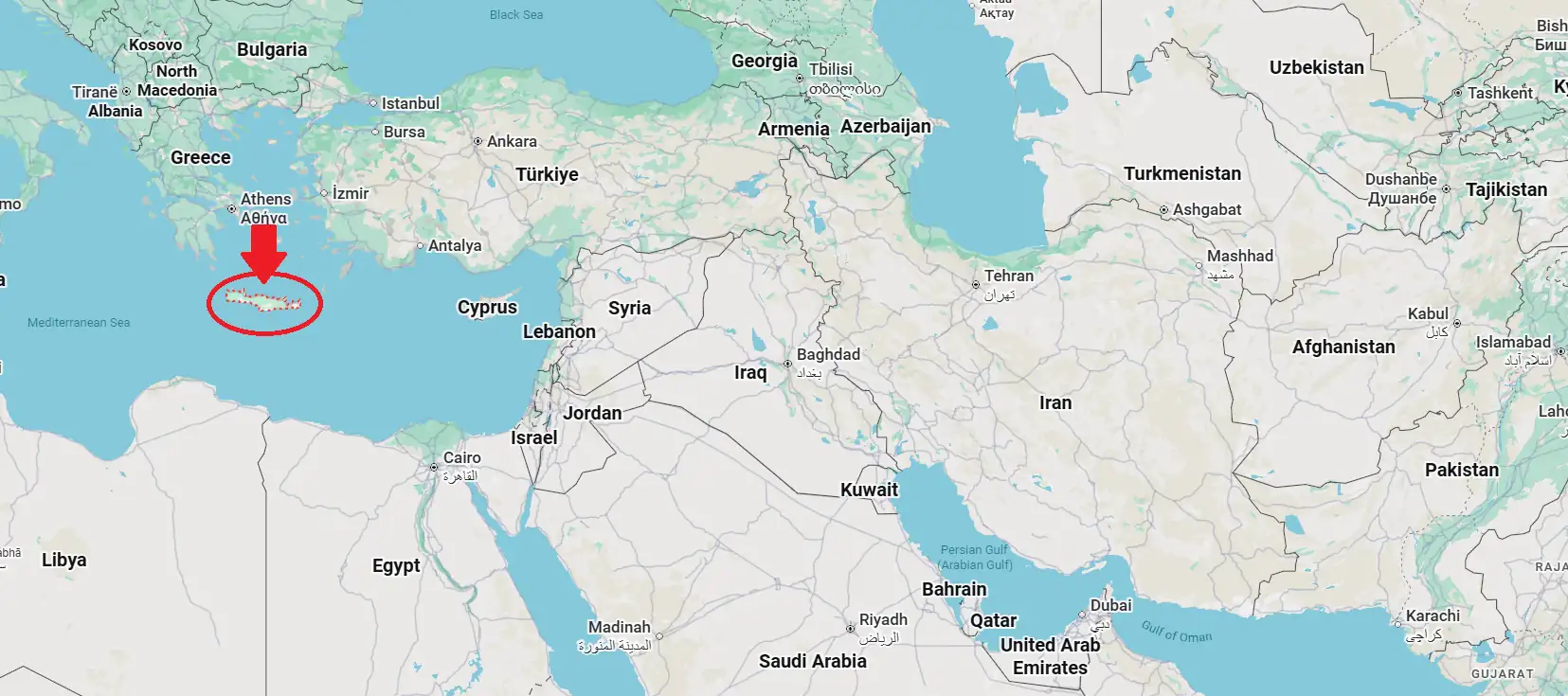
The date of the establishment of the colony by the Iranians on that island is not known, but two thousand five hundred years before Christ the principles of Iranian civilisation had been established on that island, and the way of life of the people on the island of Crete was the same as that which the people of Iran had in their centres of civilisation in Khorasan and Gorgan, and a number of the vegetables and legumes and trees that were specific to Iran were planted on the island of Crete.
Until today this matter had not drawn the attention of the historians of Europe as to what the Iranian vegetables and trees were doing on the island of Crete, whereas between that island located in the Mediterranean Sea and the country of Iran there was a great distance.
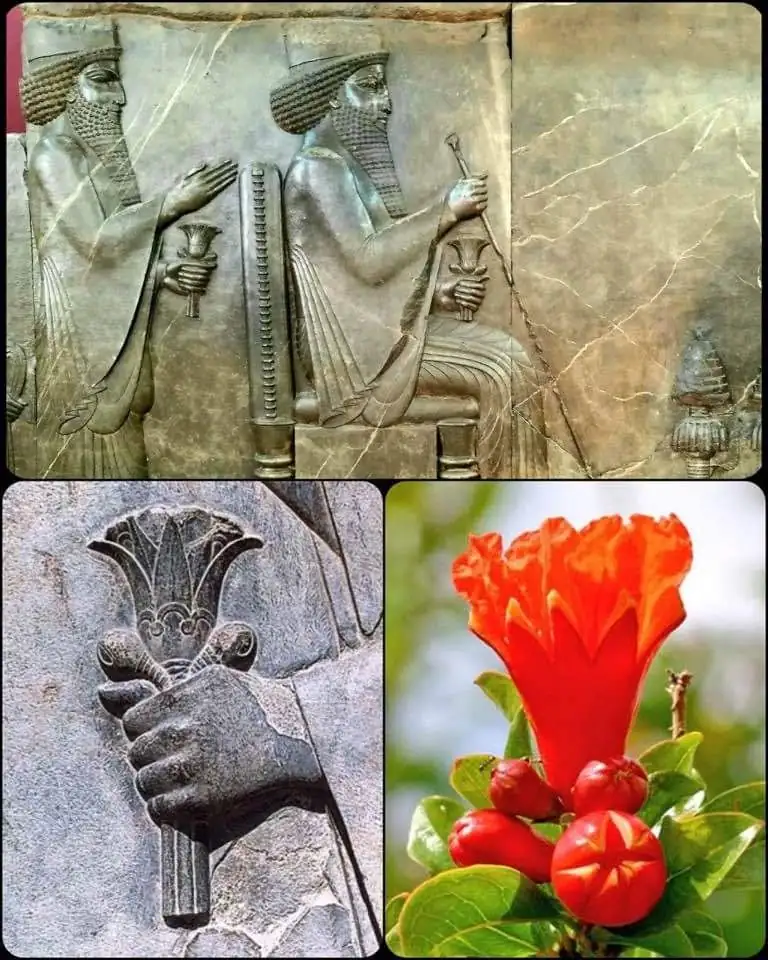
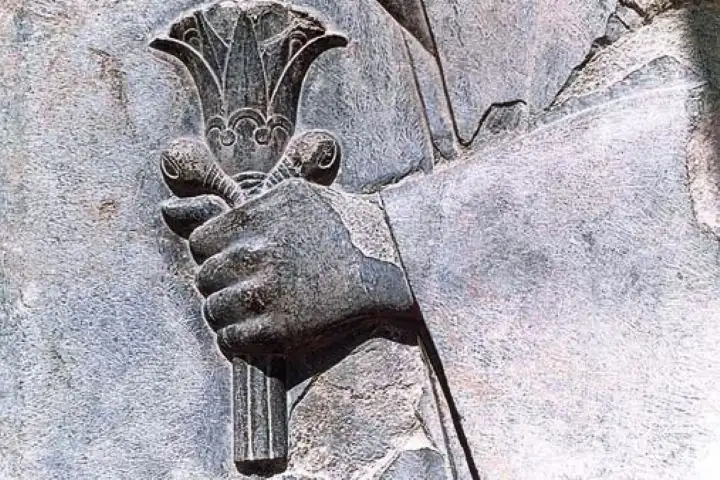
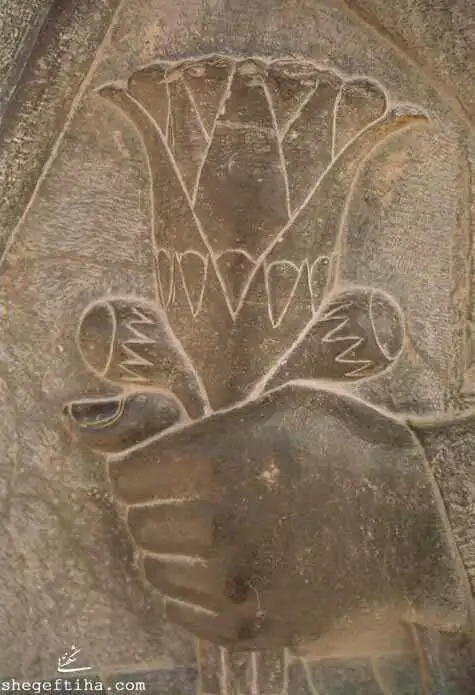
Until today historians had not paid attention to why the lily-flower motif, which was a special motif of the Iranians, is seen in the architectures of the island of Crete.
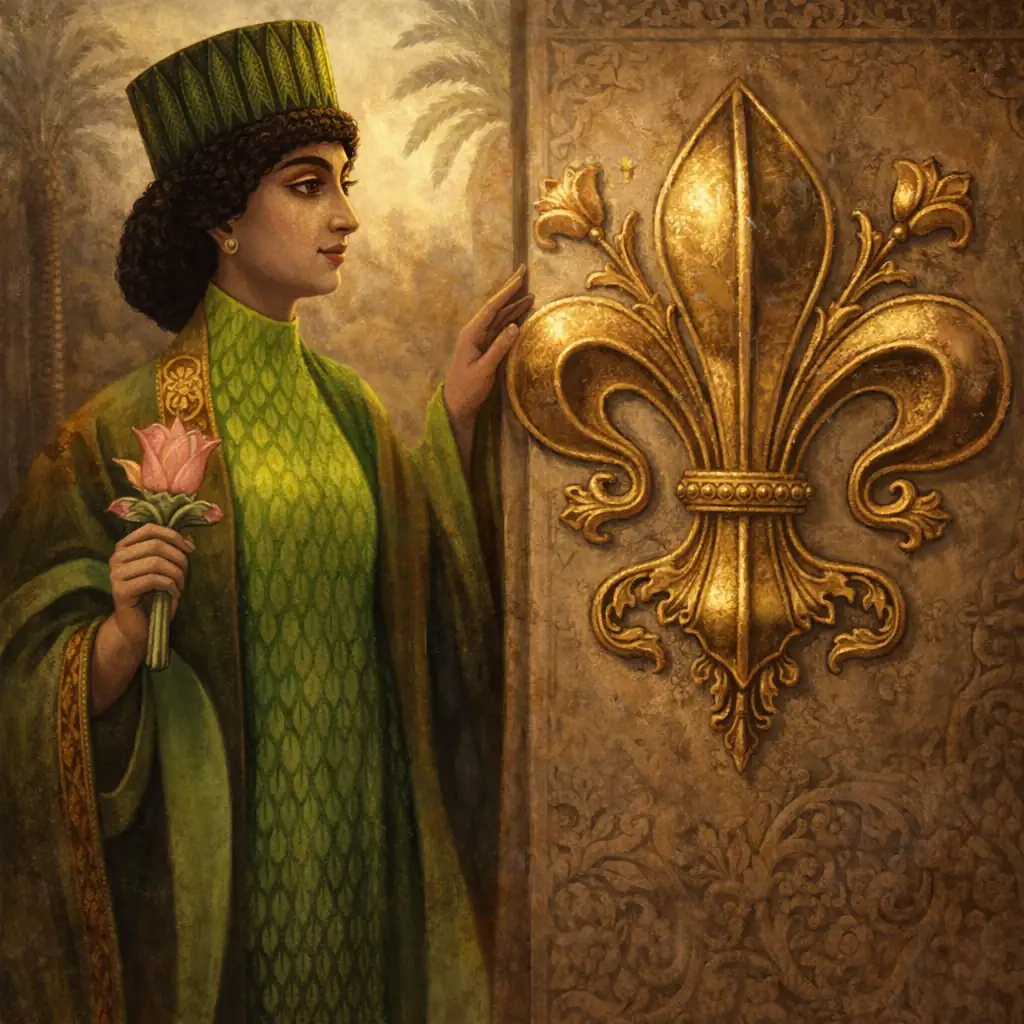
The lily-flower motif, which is now also seen in the ruins of Persepolis, was among the distinctive motifs of the Iranians, and others adopted this motif from the Iranians, and the kings of France until before the revolution of that country made this motif their official royal emblem without knowing that it was from Iran, just as the Nazis, who made the symbol of the swastika their official emblem, imagined that it was a European Aryan symbol, whereas it was among the very ancient symbols of the Iranians.